
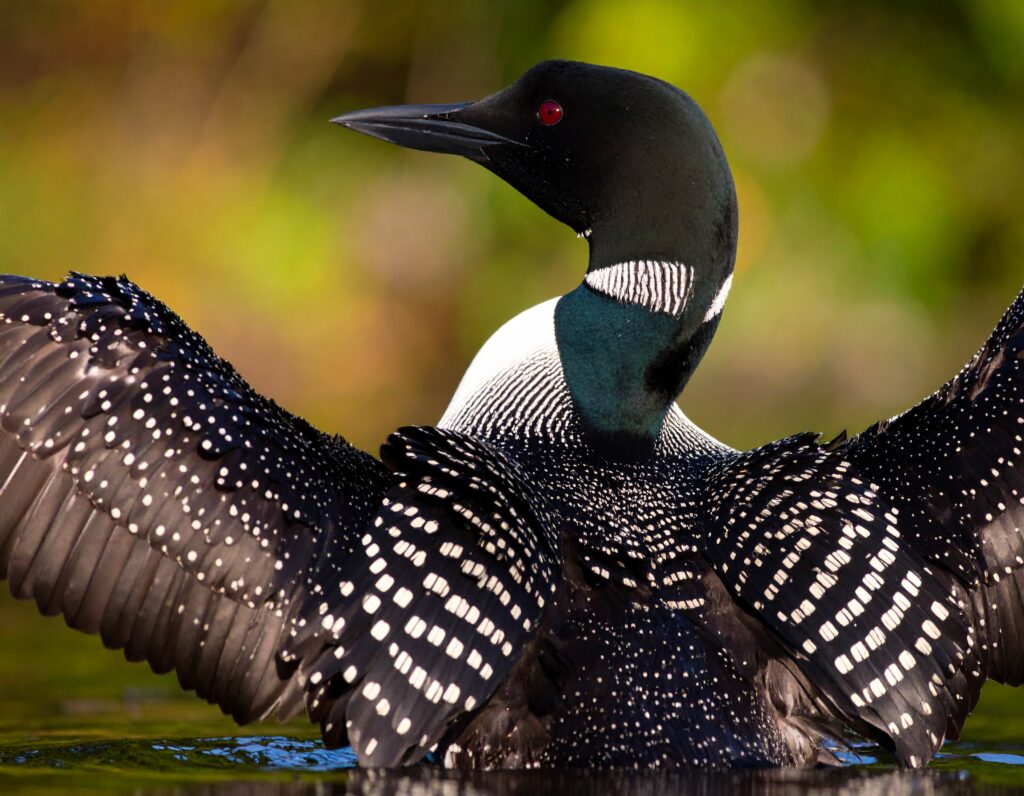
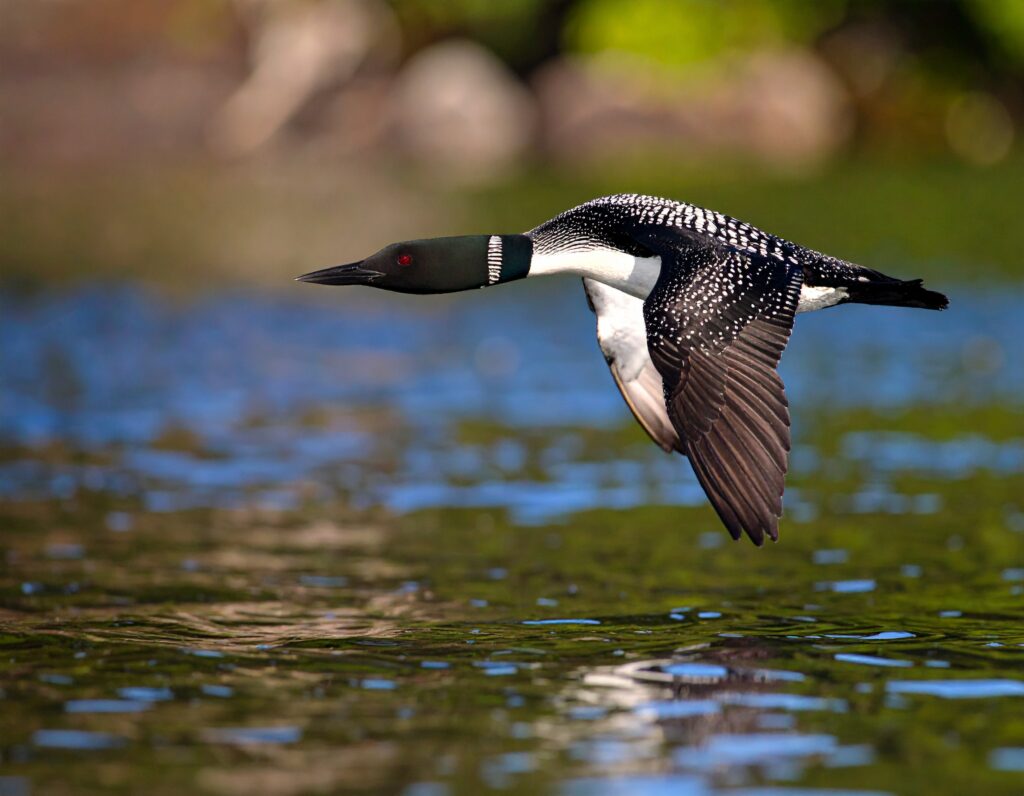
The Common Loon is the largest and best-known loon species. In summer, it has a striking black head, red eyes, and a bold black-and-white checkered back. It’s a symbol of wilderness across Canada and the northern U.S.

Common Loon Overview
| Feature | Description |
| Size | Largest loon species, about 32 inches long |
| Shape | Thick neck, heavy body, and a large straight black bill |
| Color Pattern | Black head and neck with white stripes, checkered black-and-white back in summer, gray and white in winter |
| Habitat | Forest lakes in summer; coastal waters in winter |
| Behavior | Excellent diver; needs a long “runway” to take off from the water; known for haunting wails at night |
How to Identify a Common Loon
Look for a large black-and-white bird with a long, pointed bill and red eyes.
In summer, its bold checkerboard pattern stands out against blue lakes. In winter, it becomes gray above and white below, blending into coastal waters.
Where Do Common Loons Live?
Common Loons breed on northern freshwater lakes across Canada and the northern United States.
In winter, they migrate to both the Atlantic and Pacific coasts, from Alaska down to California and from New England down to Florida.
What Do Common Loons Eat?
Common Loons feed mainly on fish—such as perch, trout, and sunfish. They also eat crustaceans, frogs, and aquatic insects.
They dive deep—sometimes over 150 feet—to chase their prey underwater, using their strong legs for propulsion.
What Sound Does a Common Loon Make?
The Common Loon is famous for its wailing cry, a long, echoing sound that travels across lakes. It also makes a tremolo (a laughing call when alarmed) and a yodel (used by males to defend territory).
Listen to common loon sounds.
How Is the Common Loon Different From Other Loons?
| Compared To | Key Differences |
| Pacific Loon | Larger, with a checkered back and red eyes; Pacific Loon has a gray head and smoother pattern |
| Red-Throated Loon | Much bigger and bolder; Red-Throated Loon is smaller, lighter, and has a red throat patch |