(The King of the Dinosaurs)
Few dinosaurs are as famous as Tyrannosaurus rex, often called T. rex.
It was one of the largest terrestrial carnivores and fiercest predators of all time.
This giant predator lived about 66 million years ago at the very end of the Cretaceous Period. With its enormous jaws, powerful legs, and teeth as long as bananas, it is often called the king of the dinosaurs. The name Tyrannosaurus rex comes from Greek and Latin and means “tyrant lizard king.”
Children and scientists alike are fascinated by this incredible animal. Let’s explore some amazing dinosaur facts and discover what made this dinosaur one of the most powerful hunters ever to walk the Earth.
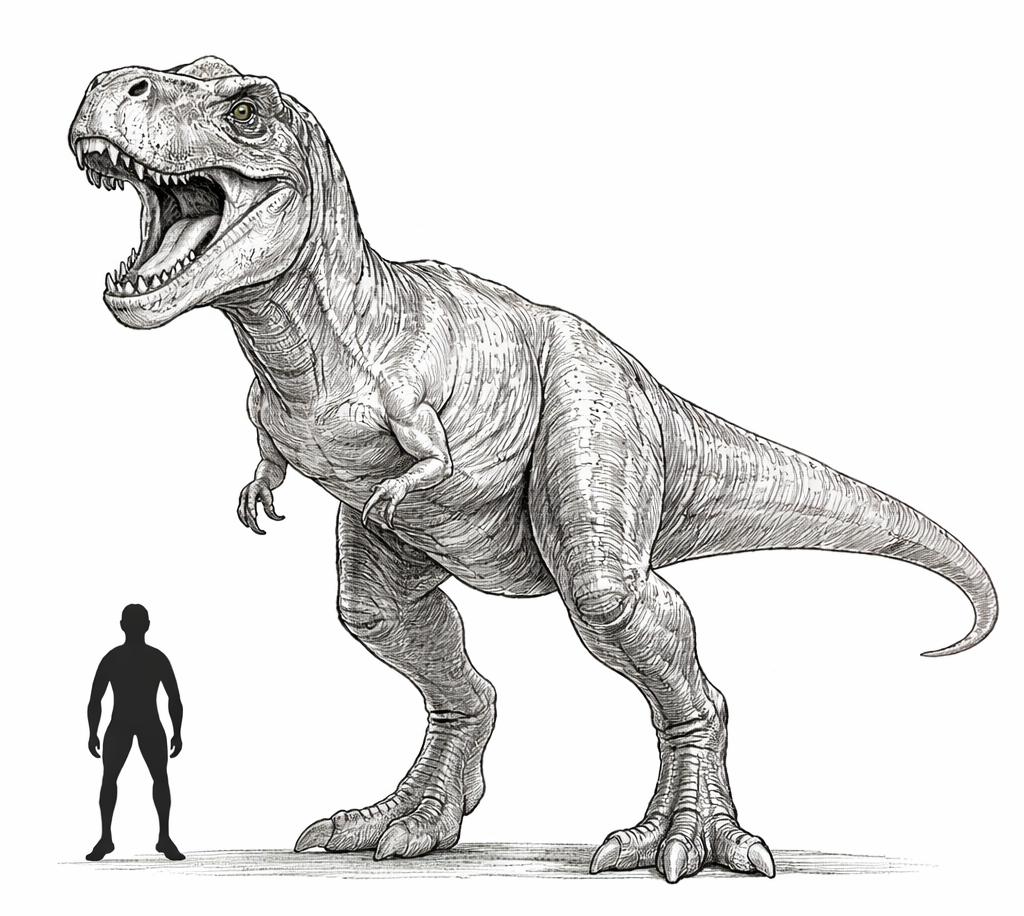
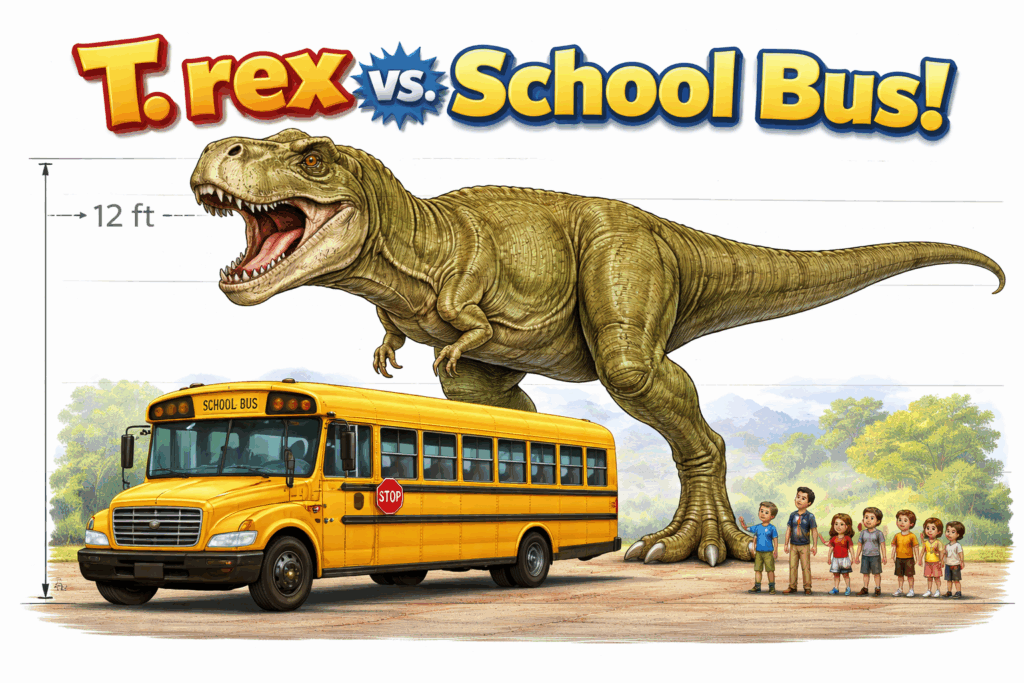
This dinosaur could grow up to 40 feet long—about the same length as a school bus! Scroll down to see how a it compares to a bus and a human.
Quick Facts
Important facts about the mighty Tyrannosaurus rex.
Tyrannosaurus Rex Quick Facts
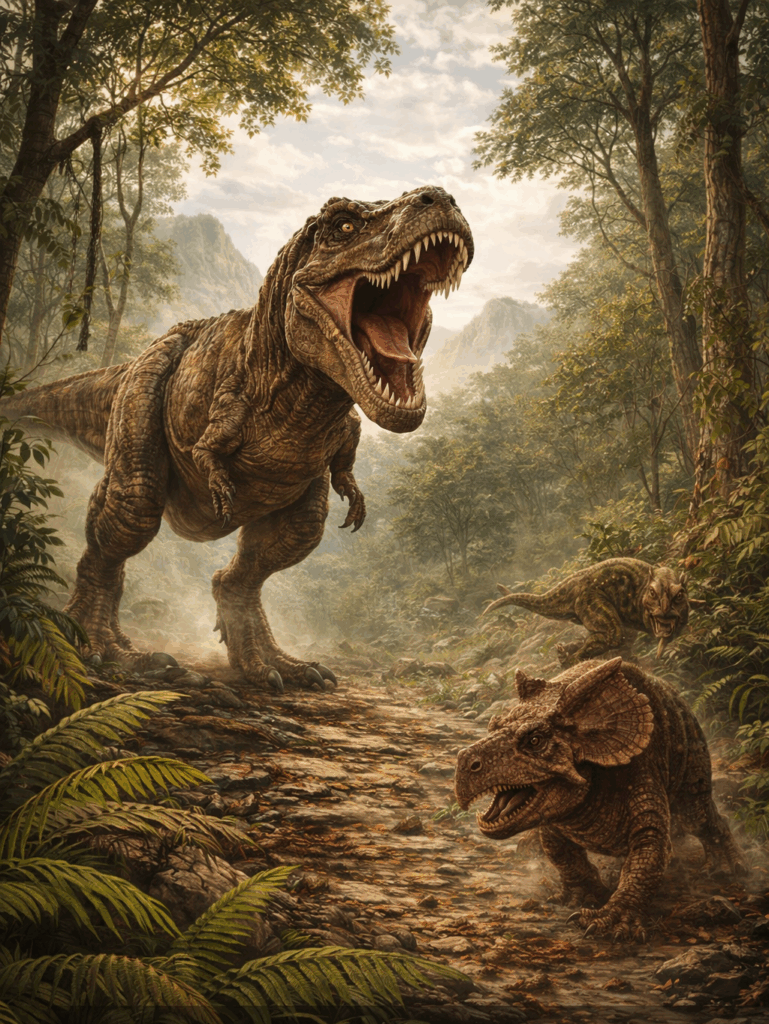
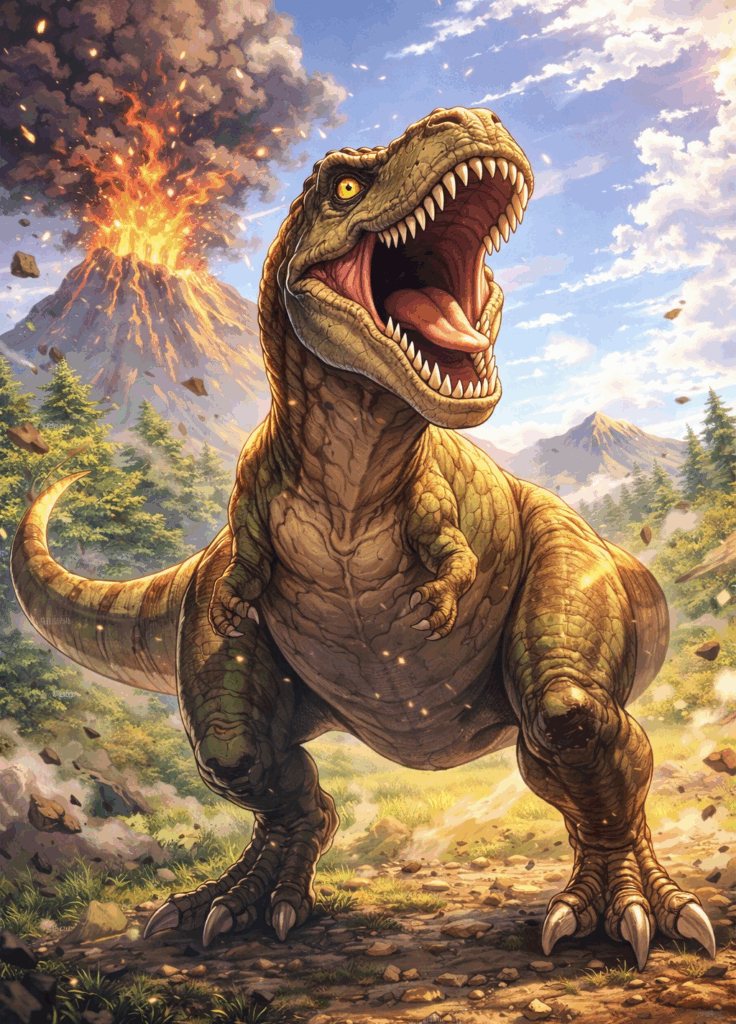
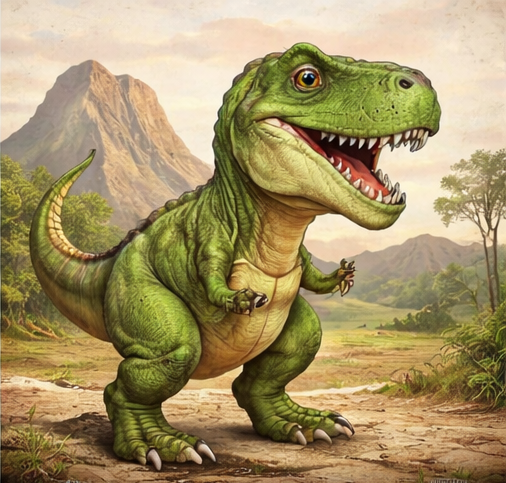
T. Rex Pictures
How Was It Discovered?
The first fossils of this dinosaur were discovered in 1902 by a scientist named Barnum Brown. He was working for the American Museum of Natural History when he uncovered bones in Montana.
These early fossils became some of the most important dinosaur specimens ever found and are still studied in museums today.
Where Did It Live?
Fossils show that Tyrannosaurus lived in western North America.
Today those places include:
- Montana
- Wyoming
- South Dakota
- Alberta, Canada
Millions of years ago, this region was very different. Instead of plains and mountains, it was full of warm forests, rivers, and swampy floodplains. Large plant-eating dinosaurs lived there too — which meant plenty of food for a hungry predator like T. rex.
What Did This Dinosaur Eat?
T. Rex was a meat-eating dinosaur, also called a carnivore.
Scientists believe it ate animals such as:
- Triceratops
- Edmontosaurus
- other large plant-eating dinosaurs
Some scientists think T. rex mostly hunted its prey. Others think it sometimes scavenged, eating animals that had already died.
Most likely, it did both.
T. Rex Skull, Teeth, and Jaws
A T. rex skull could grow over 5 feet long and was packed with sharp, bone-crushing teeth.
One reason it was such a powerful predator was its incredible bite.
T. Rex had:
- more than 50 huge teeth
- teeth over 5 inches long
- serrated edges like steak knives
These teeth could crush bone, not just slice meat.
In fact, scientists believe T. rex had one of the strongest bites of any land animal that has ever lived.
What Did its Skull Look Like?
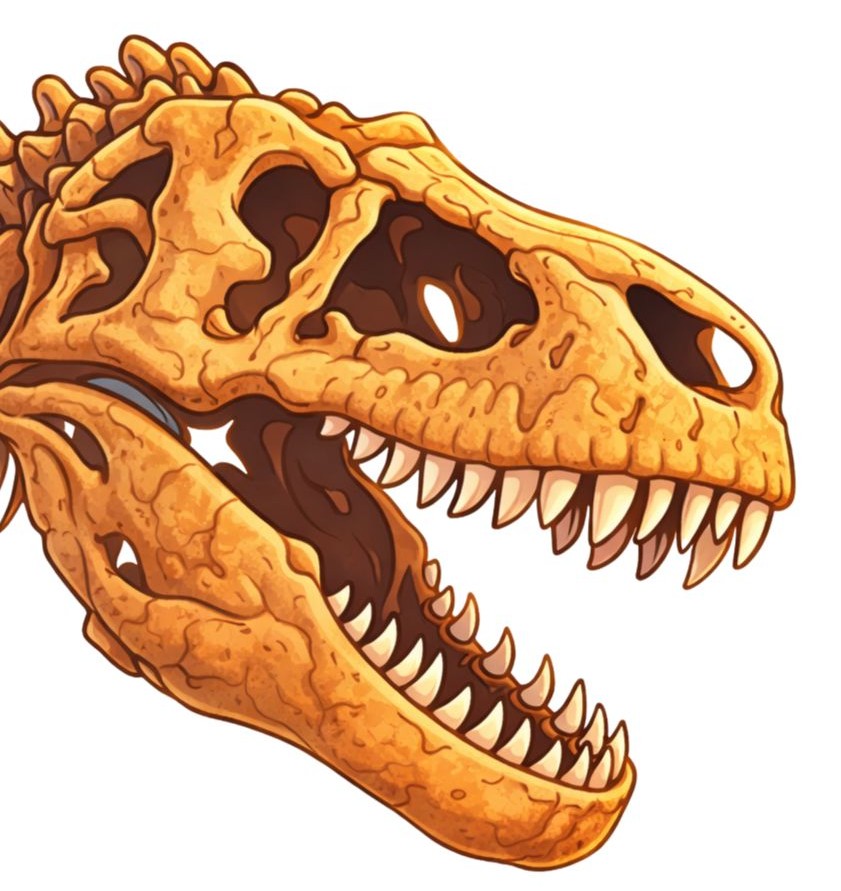
Would you believe you can own a T. rex skull for $139.000.
How Big Was It?
One of the most common questions kids ask is about the size of this dinosaur.
Tyrannosaurus rex was enormous:
- 40 feet long (about the length of a school bus)
- 12 feet tall at the hips
- weighed about 7–9 tons
Even its skull alone could be 5 feet long.
Despite its size, its arms were very small. Each arm had only two fingers.
Scientists still debate what those tiny arms were used for.
T. Rex to Human Scale
Wondering how big T. rex was compared to a human? Here’s a scale drawing to stir your imagination.
T. Rex Compared to a School Bus
Ever wonder what it would look like to run into a T. Rex while on your way to school?
Take a look at this!
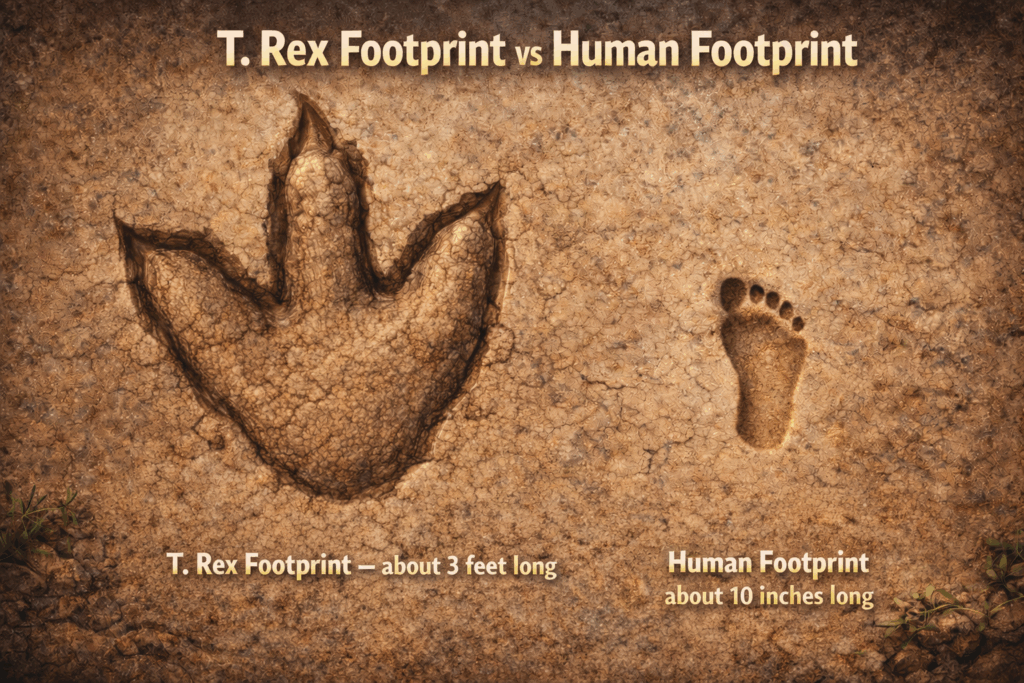
T. Rex Footprint vs. Human Footprint
Ever wonder what your footprint might look next to a T. Rex footprint?
Was T. Rex the Biggest Predator?
T. rex was one of the largest meat-eating dinosaurs, but it may not have been the absolute biggest.
Some other giant predators include:
- Giganotosaurus
- Carcharodontosaurus
- Spinosaurus
However, T. rex had something special — an incredibly powerful skull and bite that may have made it the strongest predator of them all.
The Dinosaur Family Tree
Dinosaurs are grouped by their hip structure and body type.
T. rex belonged to a group called theropods, which were two-legged meat-eating dinosaurs.
Other theropods include:
- Velociraptor
- Allosaurus
- Baryonyx
Surprisingly, modern birds evolved from small theropod dinosaurs.
That means birds are actually the closest living relatives of dinosaurs like T. rex.
Name Meaning
What does the name, Tyrannosaurus rex, mean?
The name Tyrannosaurus rex comes from Latin and Greek words.
- Tyrant – a harsh ruler
- Saurus – lizard
- Rex – king
So the name means:
“King of the tyrant lizards.”
It’s a fitting name for one of the most powerful dinosaurs ever discovered.
Could You Outrun This Dinosaur?
If you ever met a Tyrannosaurus rex, one big question would be:
Could you run away fast enough?
Probably not.
Scientists still debate exactly how fast this predator could run, but most think it could move much faster than a person over short distances. A human might sprint around 15 to 20 miles per hour for a brief moment, but a giant predator like T. rex likely had powerful legs built for chasing prey.
That means if a this dinosaur spotted you, running in a straight line probably would not be your best plan!
Just How Fast Was this Dinosaur?
Tyrannosaurus rex had:
- huge leg muscles
- strong hips
- long strides
- a heavy body built for power
Because it was so large, it may not have been the fastest dinosaur ever. But it was still likely fast enough to catch animals that were slower, injured, or surprised.
Some scientists think it may have moved more like a powerful hunter than a super-fast sprinter.
How Does T. Rex Compare to a Human?
Here’s a fun way to think about it:
- Human sprint: about as fast as a bicycle cruising through the neighborhood
- T. rex: a giant predator with legs taller than most people
Even if this dino was not incredibly fast, its size alone would make it terrifying to see charging toward you.
What Would Be Smarter Than Running?
If you lived in the age of dinosaurs, you would need more than speed.
You might need to:
- hide quickly
- stay quiet
- get behind something large
- hope it never noticed you in the first place
Try This Fun Comparison
Measure out 40 feet on the ground with chalk, string, or a tape measure.
That is about how long a full-grown T. rex could be.
Now imagine something that big moving toward you.
Even if you could run fast, you would probably still feel very small.
Quick Answer: Could you outrun a T. rex?
Most likely, no.
That is one reason Tyrannosaurus was one of the most powerful predators of its time.
Poll: What Would You Do?
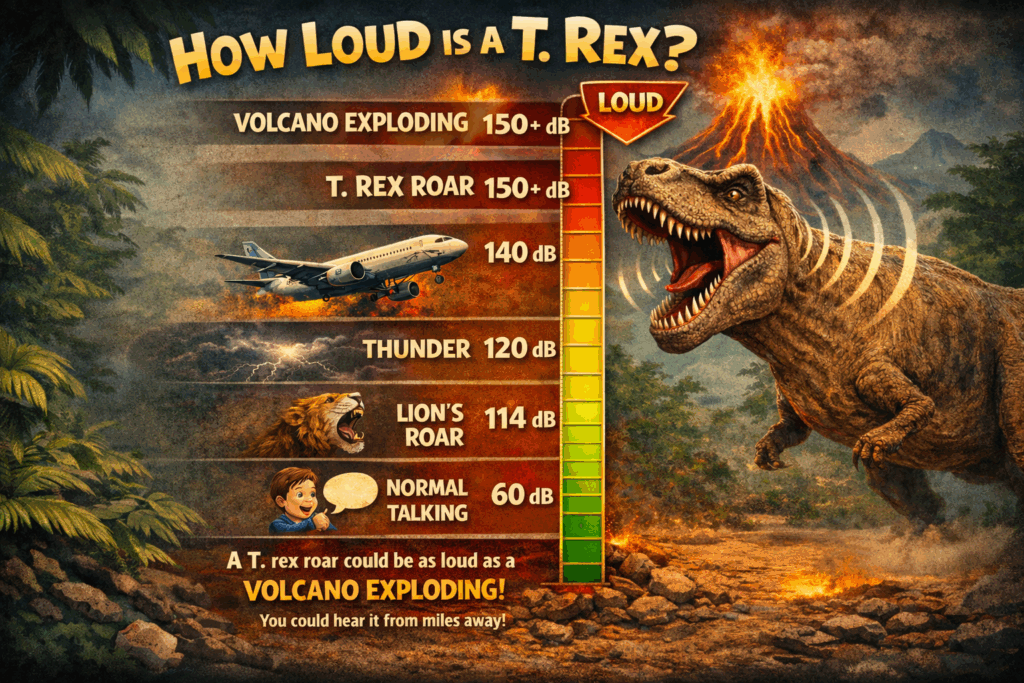
How Loud Was a Its Roar?
Have you ever wondered how loud a Tyrannosaurus rex might have sounded?
Scientists are not completely sure what noise T-rex made, but they believe it may not have roared like the dinosaurs in movies.
Instead, it may have made deep rumbling sounds, similar to animals like:
- crocodiles
- alligators
- large birds
These low sounds can travel long distances and even make the ground vibrate!
Imagine Hearing Its Roar
Imagine standing in a prehistoric forest when suddenly you hear a deep rumble in the distance.
It might sound like:
- distant thunder
- a giant drum beating
- a very deep growl
If a T-rex made a loud call nearby, it would probably be one of the loudest sounds in the ancient world.
Fun Sound Comparisons
Here’s how some animal sounds compare:
| Animal | Sound Level |
| Human speaking | about 60 decibels |
| Lion roar | about 114 decibels |
| Jet airplane | about 140 decibels |
A large dinosaur like this could have produced very powerful low-frequency sounds.
Some scientists think you might feel the vibration before you heard it.
Try This!
Put your hand on your chest and make a deep growling sound.
Feel the vibration?
Now imagine a dinosaur 40 feet long making a sound like that!
It would shake the air around you.
What Do You Think Its Roar Sounded Like?
T. Rex vs Triceratops
One of the most famous dinosaur matchups is Tyrannosaurus rex vs Triceratops.
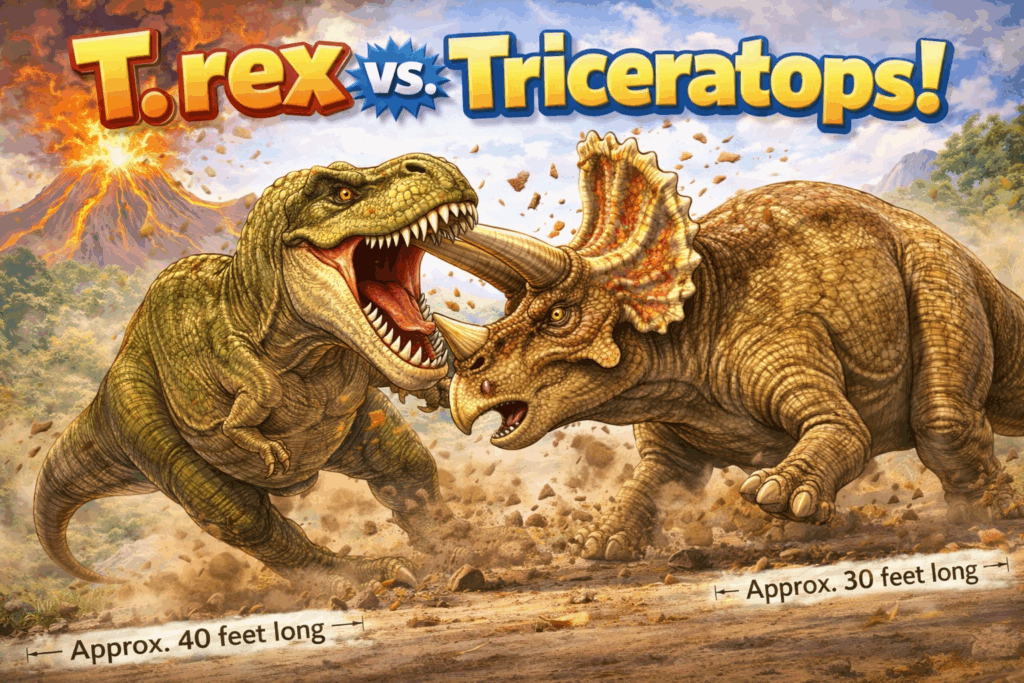
Triceratops was a large plant-eating dinosaur with:
- three horns on its head
- a large protective frill
- a powerful beak
Fossils show that these two dinosaurs lived at the same time during the Late Cretaceous period. and in the same places in North America.
That means these two giant dinosaurs may have actually encountered each other in the wild!
Some Triceratops fossils even have bite marks from Tyrannosaurus teeth, suggesting that it may have hunted them or fed on their remains.
It must have been an incredible sight — the king of predators facing one of the toughest plant eaters ever to live.
A Fun Question for Kids
Who do you think would win?
- T-rex with its powerful bite?
- Triceratops with its huge horns?
Scientists still debate what these encounters looked like!
Did T. Rex Have Feathers?
Scientists continue to learn new things about dinosaurs every year.
Some smaller relatives of Tyrannosaurus had feathers, and fossils show that many theropod dinosaurs were partly feathered.
Because of this, some scientists think that young T. rex may have had feathers, especially when they were small.
Adult Tyrannosaurus, however, was probably mostly covered in scaly skin, which helped protect its massive body.
This is one reason dinosaurs are so exciting to study — our understanding keeps evolving as new fossils are discovered.
10 Fun Facts for Kids
Here are some fun T. rex facts for kids:
- Tyrannosaurus rex lived about 66 million years ago.
- Its name means “king of the tyrant lizards.”
- T. rex could grow up to 40 feet long.
- Some of its teeth were bigger than a human hand.
- It had only two fingers on each arm.
- Scientists believe it had an extremely powerful bite.
- T. rex walked on two strong legs.
- It likely had excellent eyesight and a strong sense of smell.
- Fossils have mostly been found in North America.
- Tyrannosaurus rex is one of the most famous dinosaurs ever discovered.
Why Kids Love This Dinosaur
Tyrannosaurus rex has become the most famous dinosaur in the world.
It appears in:
- movies
- books
- museums
- toys
- science exhibits
Its huge teeth, thunderous footsteps, and powerful roar make it one of the most exciting animals to imagine.
Even though T. rex lived millions of years ago, it still captures our curiosity today.
Why Is It So Famous?
This dino is one of the most famous dinosaurs ever discovered. It appears in movies, museums, books, and toys all around the world.
Scientists discovered the first T-rex fossils in the early 1900s, and since then it has become known as the “king of the dinosaurs.”
Scientists are still doing research to understand how it lived, hunted, and grew.
Famous Skeletons
Some skeletons of this dinosaur are very famous:
Sue: One of the most complete T-rex fossils ever found, discovered in South Dakota in 1990.
Stan: A well-studied T-rex skeleton that helped scientists learn more about how the skull worked.
Stan at the Black Hills institute of Geological Research.
Questions to Explore
Scientists are still learning about Tyrannosaurus rex today.
New fossils help researchers answer questions like:
- How fast could it run?
- Did it hunt alone or in groups?
- What color was its skin?
Each discovery helps us understand a little more about the world of dinosaurs.
Learning Activities
Looking for learning activities for your child or student? Here are some great activities for kids.